Buying horse property in Erath County can look simple from the road. A place may have acreage, a barn, and a pipe gate, but that does not always mean it will work well for your horses or your long-term plans. If you want a property that fits your daily routine, supports the number of horses you intend to keep, and avoids expensive surprises, the details matter. This guide will walk you through what to look for in Erath County so you can buy with more confidence. Let’s dive in.
Why Erath County horse property is different
Horse property in Erath County is about more than just the acre count. In this part of Texas, land usability often matters more than the number on the listing. You need to know how the ground drains, how water is supplied, how pasture holds up, and whether the layout works for real day-to-day horse care.
Local climate plays a big role too. Stephenville climate normals show a mean annual temperature of 65.0°F and annual precipitation of 34.13 inches, with July and August mean daily maximum temperatures near 97°F. That makes shade, dependable water, and heat management important features on any horse property.
Rainfall also affects how well a place performs over time. Texas A&M AgriLife notes that rainfall is a major limiting factor for livestock production on Texas rangelands, and vegetation management affects runoff, erosion, and how effectively a property captures rainfall. In plain terms, a pretty pasture is not enough if the land does not hold up in dry weather or sheds water poorly after a storm.
Start with land usability
When you tour horse property, focus first on how much of the land is truly usable. A tract may advertise 10 or 20 acres, but some of that ground may be steep, low, rocky, poorly drained, or awkwardly shaped for horses. What matters most is how much of the land can actually support turnout, grazing, handling, and access.
Pasture condition deserves a close look. Texas A&M AgriLife advises that forage should be the foundation of the equine diet, and not all forage is equal. In Erath County, that means you should pay attention to grass quality, bare spots, signs of overgrazing, and whether the property is set up to support hay feeding without turning high-traffic areas into mud.
Erath CAD's horse-operation standards also provide useful local context. The district notes that typical horse pastures are improved varieties such as Coastal Bermuda, and supplemental feeding is expected. That is a reminder that even productive horse property here often depends on a mix of pasture management and feed planning.
Check fences, gates, and daily flow
A horse property should make everyday movement safe and practical. Texas A&M AgriLife highlights fencing, arenas, storage, and veterinary areas as important parts of thoughtful facility design. Good improvements can make routine care easier and reduce avoidable stress for both horses and handlers.
As you walk a property, inspect perimeter fencing and cross-fencing closely. Look at gate placement, trailer access, and whether you can move horses from pasture to barn without awkward bottlenecks. A layout that works on paper may feel very different when you imagine feeding, catching, loading, or separating horses in bad weather or summer heat.
It is also smart to think about traffic flow. Ask yourself whether feed delivery, manure handling, trailer turns, and emergency access would be manageable. A place that is horse-friendly is not always horse-ready.
Evaluate barns, arenas, and handling areas
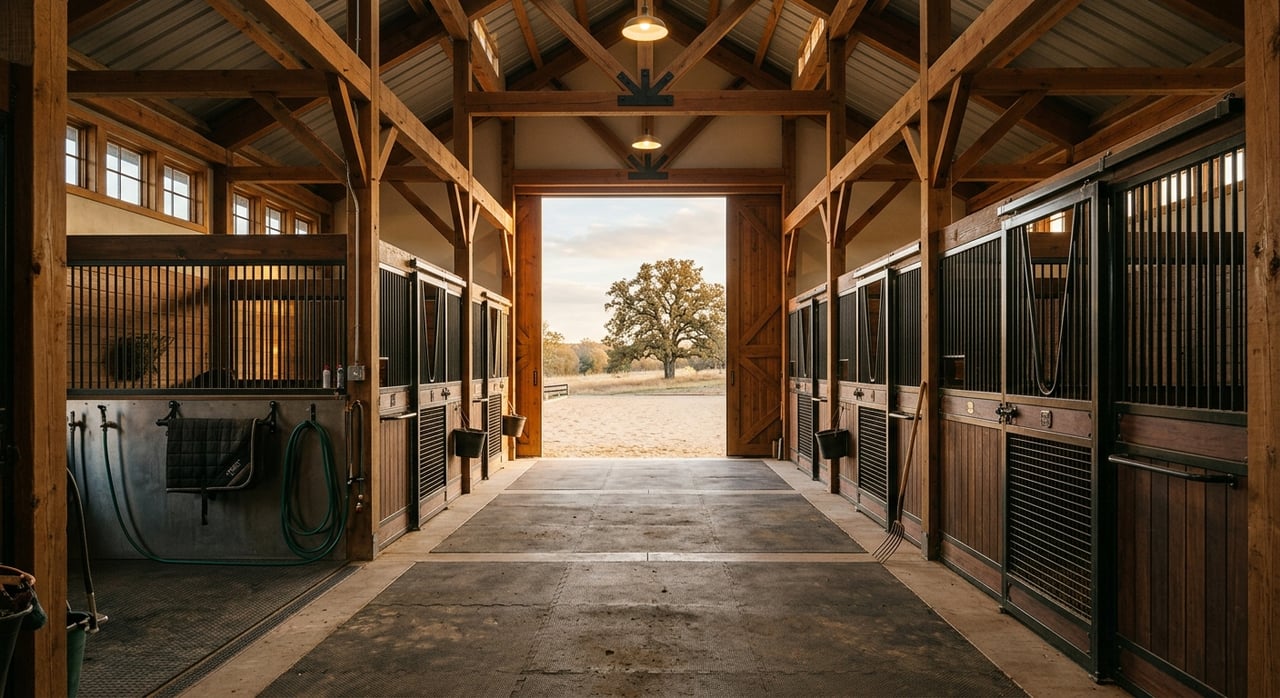
Barns and riding areas should support routine use, not just add curb appeal. Texas A&M AgriLife recommends paying attention to ventilation, storage, footing, drainage, and space for routine care. Those features affect horse health, safety, and how easy the property is to operate.
In a barn, look at stall condition, airflow, feed storage, tack storage, and room for veterinary or farrier work. In an arena, review footing depth and drainage, and ask yourself whether the surface would stay usable after rain or during long hot stretches. These are practical details that can affect both upkeep costs and your day-to-day experience.
Storage matters more than many buyers expect. If hay, feed, tack, and equipment do not have logical places to go, daily chores get harder fast. A well-laid-out property saves time every single day.
Water and shade are not optional
In Erath County, water due diligence should be high on your list. The Middle Trinity Groundwater Conservation District covers the county and registers and permits wells, monitors well levels and water quality, and plugs abandoned wells. The district also states that the presence of a water well does not guarantee access or rights to water.
That matters because horse properties often depend on groundwater for troughs, wash racks, and sometimes irrigation. If a property uses a well, you should confirm its status and understand whether any shared-well arrangement or groundwater-related limitation applies. Reliable water is one of the most important parts of a workable horse setup.
Shade is just as important in this market. With Stephenville summer highs averaging in the upper 90s, horses need practical heat protection. During a tour, check for natural shade, loafing areas, and trough placement so you can judge how well the property supports horses through hot weather.
Understand ag appraisal before you buy
One of the most common horse-property mistakes is assuming that owning horses automatically means the land qualifies for agricultural appraisal. In Texas, special appraisal is based on land use, not a marketing label. According to the Texas Comptroller, qualified open-space or agricultural land must be currently devoted principally to agricultural use, meet intensity standards generally accepted in the area, and have been devoted to agricultural or timber production for at least five of the past seven years.
Erath CAD adds local standards that matter for buyers. The district states a local minimum of five acres, excluding the homesite, for 1-d-1 agricultural appraisal, though a smaller tract may qualify if it is used with a larger tract. For horse operations specifically, Erath CAD says a mature horse equals 1.25 animal units, supplemental feeding is expected, and at least two breeding-age mares are required to be considered a typical horse-breeding operation.
The takeaway is simple: do not assume a couple of horses will make the property qualify. If ag valuation is important to your budget, verify the current status, the land-use history, and whether the operation meets local intensity expectations before closing.
Know the rollback tax risk
If you plan to change the property's use later, ask about rollback taxes early. The Texas Comptroller states that rollback taxes can apply when qualified land changes to non-agricultural use. That can become an important cost if you intend to convert pasture into a different type of residential or non-farm use.
This is one reason tax documents deserve a careful review during the buying process. You want to understand not only the current appraisal, but also what might happen if your future plans change. A clear picture on the front end can help you avoid an expensive surprise later.
Review septic and floodplain issues carefully
If the property has an on-site sewage facility, septic due diligence matters. The Texas Commission on Environmental Quality says the site must first be evaluated by a licensed site evaluator or professional engineer before an on-site sewage facility is constructed, altered, or repaired. For buyers, that makes permit records, maintenance history, and current system condition worth reviewing during the option period.
Flood risk is another item you should not skip just because the property feels rural. FEMA's Flood Map Service Center is the official source for flood hazard maps, and those maps can help identify high-risk areas. On horse property, floodplain questions can affect barns, arenas, creek-bottom pasture, low-water crossings, and even driveway access.
A place may look elevated at first glance and still have flood-related concerns in key areas. That is why map review is a practical part of horse-property due diligence in Erath County.
A practical tour checklist
When you walk horse property in Erath County, keep your attention on the features that affect daily use and long-term value.
- Usable pasture: How much of the acreage is truly grazeable or workable for turnout?
- Grass and forage: Is pasture in healthy condition, and does it show signs of overgrazing or erosion?
- Drainage: Does water move off the property well, or do you see muddy choke points and runoff problems?
- Fencing: Are perimeter and cross-fences safe, solid, and laid out for easy movement?
- Gates and access: Can trailers, feed trucks, and equipment move easily around the property?
- Arena footing: Does the riding surface look workable in both wet and hot conditions?
- Barn function: Is there enough ventilation, storage, and room for routine horse care?
- Water supply: What is the source, and has the well or water setup been verified?
- Shade and heat protection: Are there practical places for horses to cool off in summer?
- Tax records: Is the ag valuation current, and does the use appear to support local intensity standards?
- Septic records: Are permits, evaluations, and maintenance history available?
- Floodplain review: Are barns, pastures, crossings, or access points affected by mapped flood risk?
Why local guidance matters
Horse property is one of the easiest categories to misunderstand if you are shopping from photos alone. The right place needs to work as land first, then improvements second. In Erath County, that means understanding pasture use, local ag standards, water questions, and how the property functions in real weather conditions.
That is where local land experience can help. Ridge Tex Realty is built around ranch, farm, horse property, undeveloped acreage, and rural homes on land across North Central Texas. With deep Stephenville roots and decades of farm and ranch experience, the team understands how to look past surface appeal and focus on the details that shape value and day-to-day usability.
If you are thinking about buying horse property in Erath County, the best next step is to walk the land with someone who understands what makes a place practical for horses, taxes, and long-term use. Reach out to Ridge Taylor for straightforward guidance on finding the right property.
FAQs
What should you look for first when buying horse property in Erath County?
- Start with usable land, water access, shade, fencing, drainage, and whether the layout works for daily horse care.
Does owning horses qualify land for ag appraisal in Erath County?
- No. Texas ag appraisal is based on qualifying agricultural use, local intensity standards, and use history, not simply on horse ownership.
How many acres do you need for horse property ag appraisal in Erath County?
- Erath CAD states a local minimum of five acres excluding the homesite for 1-d-1 agricultural appraisal, though some smaller tracts may qualify when used with a larger tract.
Why does water due diligence matter for horse property in Erath County?
- The local groundwater district states that a well's presence does not guarantee access or rights to water, so buyers should verify well status and any applicable regulations.
Should you check flood maps when buying rural horse property in Erath County?
- Yes. Flood maps can affect barns, arenas, creek-bottom pasture, low crossings, and property access, even when a tract appears rural or elevated.
What barn and arena features matter most on horse property in Erath County?
- Focus on ventilation, storage, safe handling space, footing quality, and drainage so the property supports routine care and regular use.