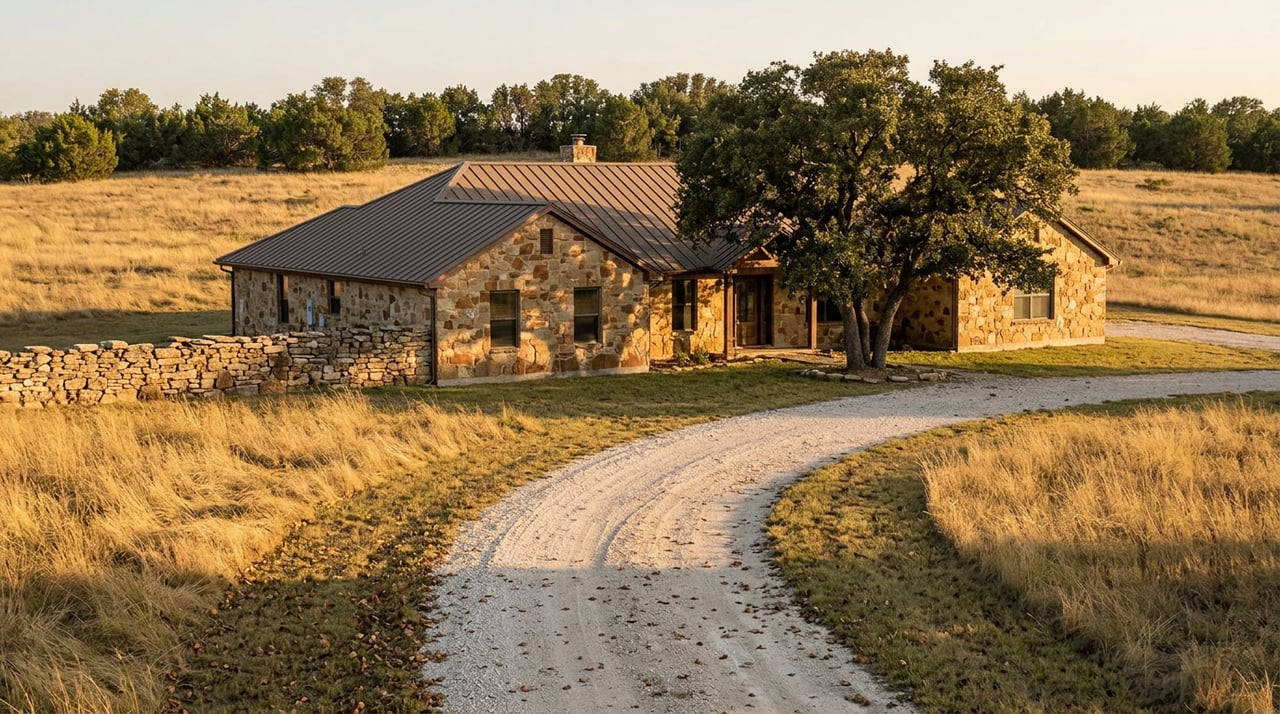
What does a form ask you that you can't answer? That's the situation a lot of Erath County sellers are about to find themselves in, whether the tract is forty acres with a stock tank or a three-hundred-acre working ranch with a creek running through it.
Since July 1, 2026, Texas sellers of rural property have to fill out a brand-new state form called the Water Notice, and it asks questions most landowners around here have never had to put in writing. Not because the water is a problem. Because in a county where every well answers to the same groundwater district and the county's biggest industry sits on a river the state has regulated for phosphorus since 2001, the paperwork trail behind the water is thinner than most sellers assume.
Six Questions, One New Form
The Texas Real Estate Commission adopted the new Water Notice on May 4, 2026, and it became mandatory July 1. It's a standalone disclosure, separate from the general Seller's Disclosure Notice, and it's built specifically for the kind of transaction Erath County runs on: rural, acreage, farm, ranch, and anything with a private well. The official TREC form walks a seller through what they know about groundwater district status, the wells on the property, whether any of those wells are permitted or exempt, whether groundwater rights have ever been sold or leased away from the surface, and what surface water features (a pond, a creek, a tank) come with the place and what rights attach to them.
None of that is unreasonable to ask. A buyer putting money into acreage deserves to know what they're actually getting when it comes to water. The friction shows up when a seller sits down to answer honestly and realizes they've never had to think about half of it.
One Office Handles Every Well in the County
Every well in Erath County falls under the same jurisdiction: the Middle Trinity Groundwater Conservation District, headquartered on Wolfe Nursery Road in Stephenville. The district was created following a 2001 act of the Texas Legislature and confirmed by voters in Erath and Comanche counties, with Bosque and Coryell annexed later. Its job, plainly stated, is to preserve, conserve, and protect groundwater for the four counties it covers, and it does that through registration, permitting, and monitoring under Chapter 36 of the Texas Water Code.
That single-agency structure is actually a convenience once you understand it. There's one phone number, one office, one public well map to check. The trouble is that most rural landowners in Erath County have never had a reason to call that office, because their well falls into a category the district treats differently.
Exempt or Permitted: What the District Requires Either Way
| Exempt well (domestic, livestock, poultry, under 25,000 gal/day) | Permitted well (all other uses) | |
|---|---|---|
| Registration with MTGCD | Required | Required |
| District approval before drilling | Required | Required |
| Operating permit | Not required | Required |
| Ongoing permit compliance reporting | Not applicable | Required |
That first row is where sellers get tripped up.
Exempt Was Never the Same as Off the Books
Most stock wells and household wells in Erath County qualify for the domestic and livestock exemption, meaning the district doesn't require an operating permit as long as the well can't produce more than 25,000 gallons a day and meets basic size and subdivision rules. A lot of landowners hear "exempt" and stop paying attention right there. The district's own guidance corrects that assumption directly: exempt does not mean unregulated. Every well, exempt or not, still has to be registered, and the district requires that approval happen before drilling starts, not after. A well can't get drilled first and registered later.
That distinction matters the moment a seller opens the new Water Notice and hits the question about whether the property's wells are registered. A well that's been quietly watering cattle for thirty years without ever crossing the district's desk isn't a violation waiting to be discovered by a title company. It's a gap that a five-minute call to the district office can usually close before the form ever gets filled out, which is a far better time to find it than during option period.
The Sixty-Day Clock Starts at Closing
Here's a detail that rarely makes it onto anyone's closing checklist. When ownership of a property changes hands, the new owner has 60 days to transfer the well registration into their name with the Middle Trinity Groundwater Conservation District. Miss that window and the district's rules allow for a fine, with civil penalties and, in extreme cases, mandatory well closure sitting behind that as the escalation path for anyone who ignores registration entirely.
For a buyer moving from a Fort Worth subdivision onto forty acres outside Stephenville, that's not the kind of thing anyone thinks to mention. Title companies close on water rights language, mineral reservations, and survey lines. A post-closing errand with a groundwater district is easy to lose in the shuffle of moving trucks and utility transfers. It shouldn't be. The Middle Trinity Groundwater Conservation District office can walk a new owner through the transfer in one phone call, and registered wells come with a real benefit attached: one free water quality test a year, checking for bacteria, pH, nitrates, hydrogen sulfide, and total dissolved solids, with results back in 48 hours.
Why the Surface Water Line Reads Different Here
The Water Notice also asks about surface water, meaning any creek, pond, or tank on the property and what rights come with it. In most counties that's a straightforward question. In Erath County it sits on top of a regulatory history that goes back further than most current landowners realize.
The North Bosque River starts in central Erath County northwest of Stephenville and flows southeast through Hico, Meridian, Clifton, and Valley Mills before reaching Lake Waco, which supplies drinking water to more than 200,000 people in the Waco area. That river has been on the state's impaired waters list since the late 1990s for elevated phosphorus, and in 2001 the state adopted a formal pollution budget for it, identifying dairy waste application fields as one of the two largest controllable sources of that phosphorus alongside municipal wastewater plants. That history isn't ancient. The state's most recent status report on the North Bosque cleanup effort came out in October 2025, and the watershed is still being actively monitored.
Erath County sits inside what the state calls the Dairy Outreach Program Area, a designation that lowers the animal-count threshold at which a dairy operation needs written state authorization, a reflection of just how concentrated the dairy industry is here compared to most Texas counties. Active operations permitted by TCEQ in the county right now include a dairy calf operation south of Lingleville and a facility near Dublin that applied in August 2025 to expand its heifer capacity to 2,500 head. None of this means a given pond or creek has a water quality problem. It means that for a tract whose pond or creek eventually drains toward the North Bosque, the surface water section of the new disclosure form is more likely to prompt a real conversation, and a buyer's lender or title company is more likely to ask a follow-up question, than it would on a property sitting on a different river system entirely.
Before You List, or Before You Offer
A few things worth doing before the Water Notice becomes the thing holding up your closing:
- Call the Middle Trinity Groundwater Conservation District at (254) 965-6705 and confirm every well on the property, exempt or not, is registered in the current owner's name.
- If you're buying, ask the seller for the district's registration number and put the 60-day transfer deadline on your own calendar the day you close, not the day you remember.
- Check the district's public well map before you assume a well's status one way or the other.
- If the property has a pond, tank, or creek, ask whether it's spring-fed, stock-tank runoff, or tied into a named creek or the North Bosque itself. That answer shapes how the surface water section of the form gets filled out.
- If anything on the form touches severed or leased groundwater rights, that's a conversation for a title company or a real estate attorney, not a guess.
A Few Questions Worth Asking Directly
Does the Water Notice apply if my well already has an MTGCD permit? Yes. Having a permit doesn't exempt a seller from the new disclosure. It just means the permit details are what gets disclosed.
What if I genuinely don't know whether my well is registered? That's common enough that the district fields the question routinely. A call to the Stephenville office or a check of the public well map will settle it before you're mid-transaction.
Does acreage size change whether I need to fill this out? No. The form isn't scaled to lot size. A two-acre homestead with a well and a three-hundred-acre ranch with three stock tanks both use the same disclosure.
Does this new form replace mineral rights or wildlife exemption disclosures? No. It's a standalone addition alongside whatever else a seller already discloses. It doesn't consolidate or replace anything that came before it.
Water has always been the difference between two tracts that look the same on paper. The new disclosure just puts that difference in writing earlier in the process, which is a better place for it than option period. If you're getting ready to list acreage in Erath County, or you're circling a property and want to know what questions to ask before you write an offer, Ridge Tex Realty works this ground every day and can walk you through exactly what the paperwork means for your specific tract. Contact us.