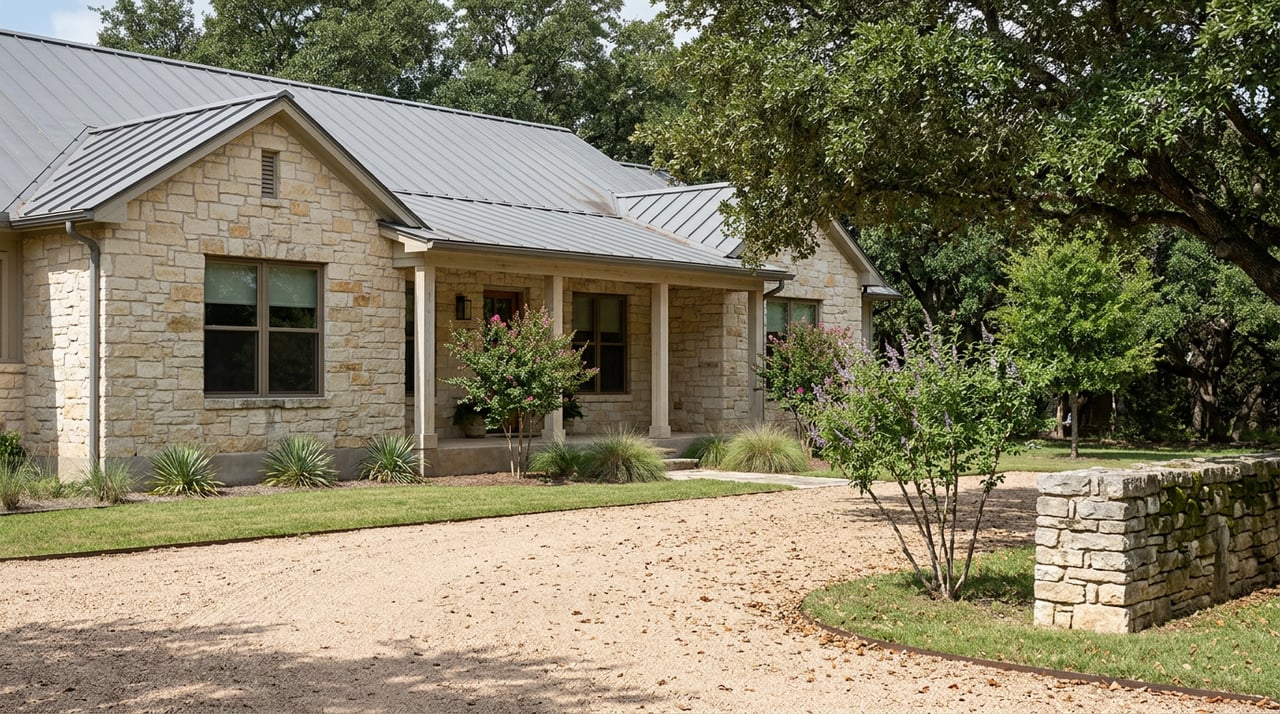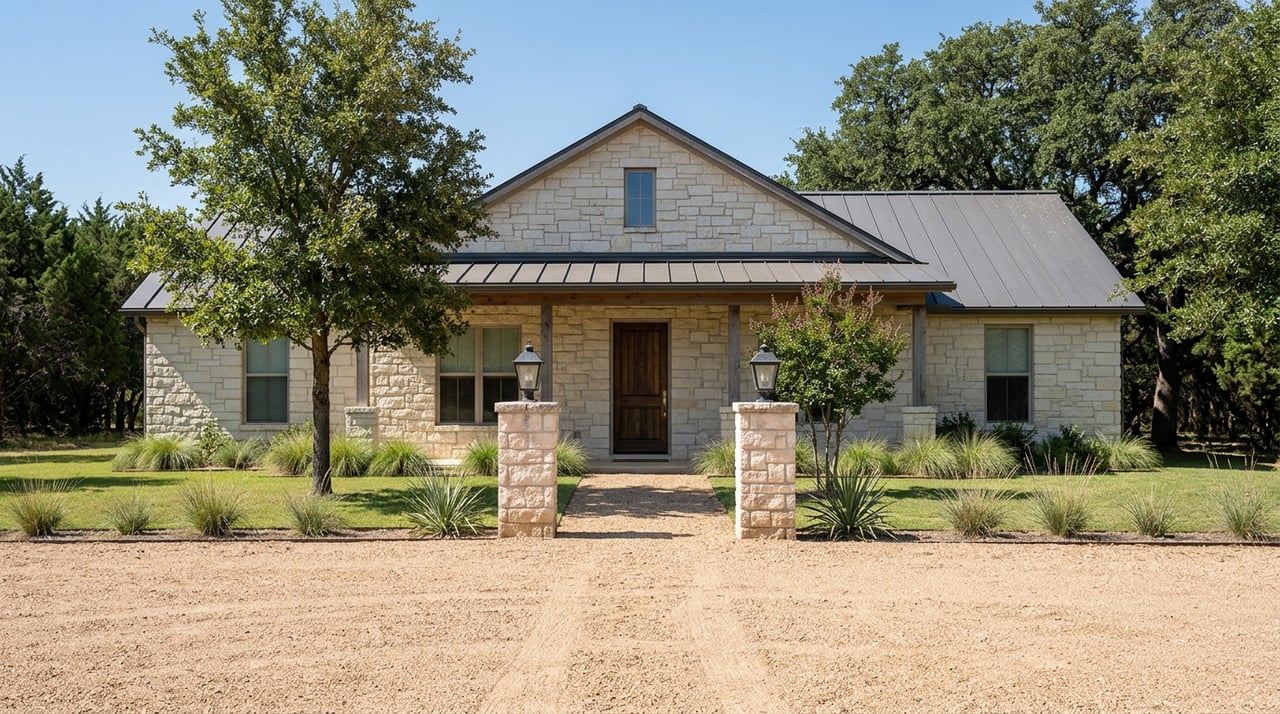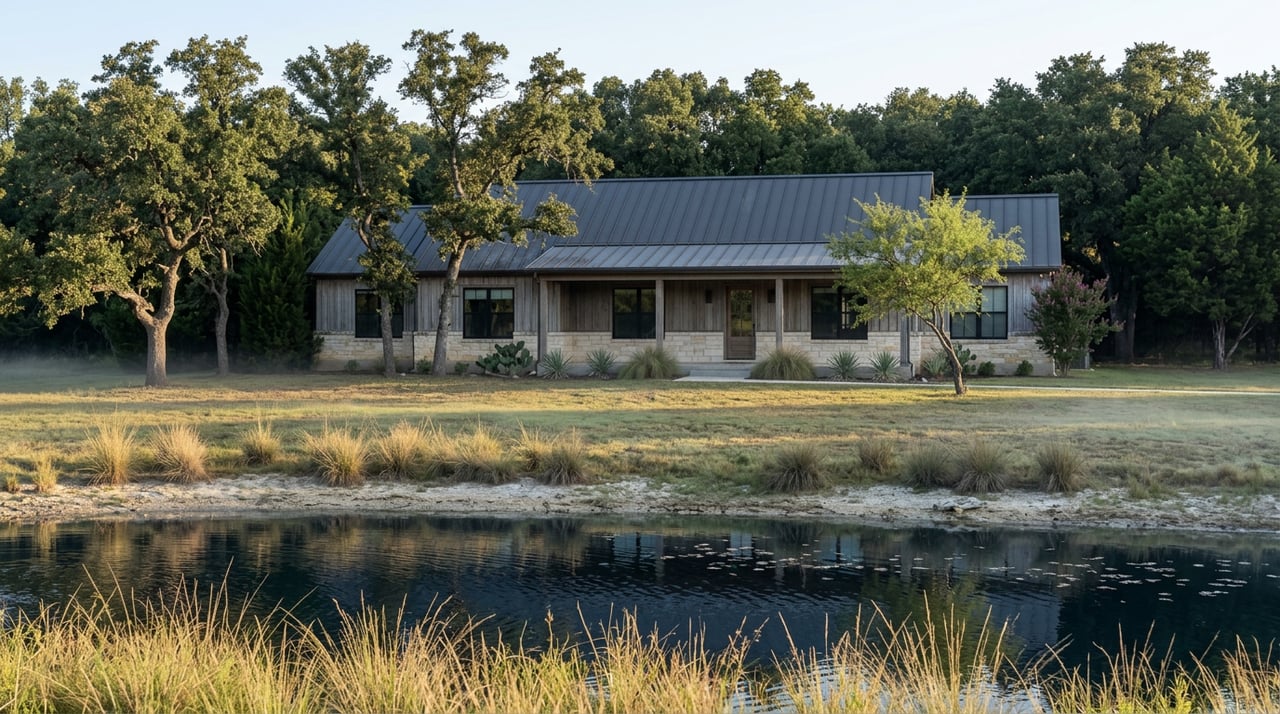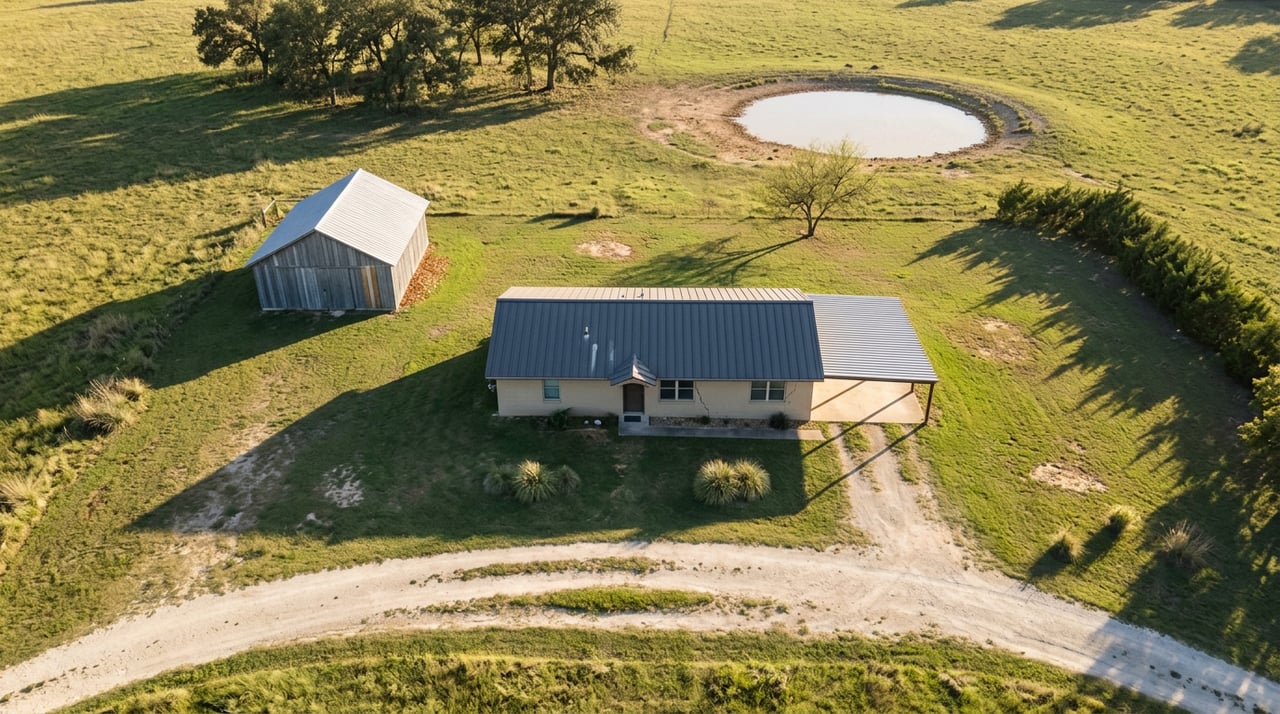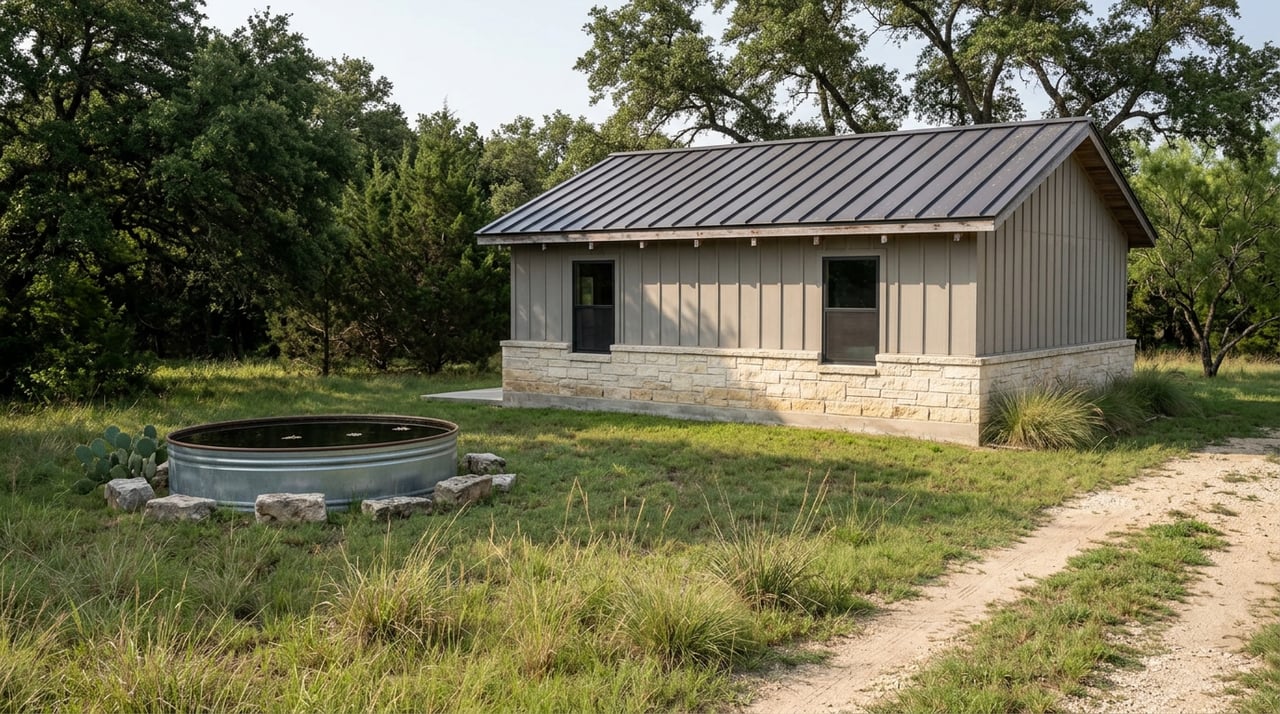
A Fort Worth buyer pulls up two listings on the same afternoon. One is 80 acres of Cross Timbers oak and pasture in Erath County, twenty minutes south of Stephenville, at $23,000 an acre. The other is 80 acres of Cross Timbers oak and pasture in Eastland County, forty minutes further west off I-20 near Cisco, at $9,000 an acre. Same ecoregion, same soils, same white-tail cover, same stock tanks. The Eastland tract looks like a gift.
It usually isn't. The gap between those two numbers is almost entirely a demand story, not a land-quality story, and the buyer who treats it as free money often ends up paying most of the discount back in a single tax bill during year two. That is the trade this post is about.
The gap, stated plainly
The most recent per-acre marks across the major land aggregators tell a consistent story as of mid-2026. Eastland County land listings sit at a median around $9,431 per acre with an average near $12,303 across roughly 4,273 listed acres. Erath County listings sit at a median around $23,455 per acre with an average near $27,403 across roughly 12,703 listed acres. Sold-record medians tell the same story further down the price ladder: Eastland closes around $7,571 to $7,845 per acre, Erath around $15,020.
That is a two-to-three-times spread on land that a soil map and an aerial photo would call effectively the same dirt. Both counties sit in the Cross Timbers ecoregion. Both front I-20. Both have Leon River drainage, post oak canopy, and enough sandy loam to run cattle or hold deer.
Why Stephenville sets the Erath number
The Erath premium is a Stephenville premium. Tarleton State University anchors a steady stream of faculty, staff, ag-industry buyers, and rodeo and equine money into a county with just 1,089 square miles to absorb it. Erath's employment mix is 22.8% education and healthcare against 10.8% agriculture, which is unusual for a county this rural and tells you where the paychecks come from. Add the Morgan Mill and Bluff Dale corridors that put a working ranch inside an hour of Fort Worth, and you have a demand pool that Eastland cannot draw from.
Look at what that pool is willing to pay for. The 314-acre White Ranch off CR 265 lists as a family recreational ranch twenty miles south of Stephenville. The 851-acre Ranch Connection at Morgan Mill markets on the sub-one-hour Fort Worth drive. Even 10- to 12-acre ag-exempt tracts near Tarleton clear $25,000 an acre. The land isn't the product. Proximity to Stephenville is.
What that leaves for Eastland
Eastland loses that anchor and picks up thirty to forty-five minutes of interstate. Fort Worth to Cisco runs about ninety minutes. Fort Worth to Gorman or Rising Star runs longer once you leave I-20. The county has no university, no metro employer of scale, and an economy that Texas A&M AgriLife still describes as agriculture, business, and industry in that order. The 2020 census put the population at 17,725, essentially flat.
What that produces is a land market for buyers who want the Cross Timbers experience without paying for Stephenville. The inventory reflects it. Cisco carries the most listings in the county. The South Fork Leon River tracts south of Cisco, the 171-acre Williams Ranch, the 286-acre high-fenced property on US 183 near CR 154, Lake Leon frontage on the east side, and the 504-acre former peanut-and-dairy ranch all trade at Eastland numbers, not Erath numbers. The hunting is comparable. The soils are comparable. The drive is not.
If you can accept the drive, the discount is real. The Metroplex buyer who plans to run cows, keep the fences up, and use the place two weekends a month gets close to a two-for-one on acreage compared to Erath. The problem is the buyer who plans to do something else.
The rollback that eats the discount
Almost every Eastland tract of consequence carries a 1-d-1 open-space agricultural valuation. That valuation taxes the land on its productive capacity, which on a working Texas ranch typically runs a 90%-plus discount to market-value taxation. Sellers feature it on the listing sheet because the annual bill looks tiny.
The valuation belongs to the use, not the owner. When the use changes, Texas Tax Code Chapter 23 triggers a rollback. Under House Bill 1743, effective 2019, the rollback covers the prior three years and adds 5% annual interest, down from the older five-year, 7% version most out-of-state guides still describe. The bill is the difference between what the county would have collected at market value and what it actually collected at ag value, compounded across those three years.
Work the number on a realistic Eastland scenario. A 60-acre tract at $9,500 an acre carries a market value of roughly $570,000. A combined rural tax rate around 1.8% would produce a market-rate annual bill near $10,260. The ag-value bill on the same tract commonly runs $200 to $400. Call the annual gap $9,900. Three years of that gap is $29,700. Add 5% interest per year and the rollback lands somewhere near $32,000 to $33,000 on the day a buyer breaks the qualifying use.
Break it how. The classic triggers are building a homesite that the appraisal district reads as changing the primary use, subdividing, fencing off a personal yard large enough to count, or simply letting the cows leave and the pasture idle. A sale by itself does not trigger. The clock only starts when the qualifying activity stops.
There is one meaningful softener in the code. The rollback is proportional. A two-acre homesite carved out of a 60-acre tract triggers rollback on the two acres only, provided the remaining 58 acres stay in qualifying use and the CAD paperwork reflects the split. The buyer who runs a small herd on the balance and files the split correctly protects most of the ag valuation on most of the land. The buyer who moves in, mows everything, and calls it home pays the full number.
Wildlife valuation is the usual escape, with a catch
The second softener is a wildlife management valuation under the same 1-d-1 chapter. It taxes the land at the same productivity rate as traditional ag and covers the kind of use most Metroplex buyers actually want, which is white-tail, turkey, quail, and dove habitat rather than a cow-calf operation. It requires a written management plan filed with the Eastland County Appraisal District and at least three of seven qualifying practices performed each year, on the Texas Parks and Wildlife Department framework.
The catch matters. A wildlife valuation can only convert from land that already qualifies for ag at the moment of conversion. You cannot buy a tract that has fallen out of ag, do nothing for a year, and then declare it wildlife. If a seller has already let the ag lapse, you inherit a market-value tax bill and no shortcut back. Reading the current valuation on the appraisal district record before you write an offer is worth more than any listing photo.
Reading an Eastland listing with the gap in mind
- Confirm the current 1-d-1 status on the Eastland County Appraisal District record, not on the listing remarks.
- Ask how the seller has satisfied the intensity standard, whether it is stocking rate on cattle, hay production, or an existing wildlife plan.
- Price out a realistic three-year rollback at market value before you decide what a homesite carve-out is worth.
- Get the rollback allocation into the contract. Default law puts it on the party that changes the use, which is usually the buyer post-closing, but nothing in a Texas contract stops the parties from negotiating that differently.
- Treat road frontage, water, and canopy as the same variables you would price in Erath. The discount is not a discount on quality. It is a discount on proximity to Stephenville.
FAQ
Is the Eastland discount closing? The Texas Real Estate Research Center at Texas A&M expects statewide acreage sales to start rising again in the second half of 2026 after a soft 2025. Northeast Texas, which covers the DFW-adjacent counties, sat at roughly $9,313 per acre in the most recent full-year data with volume down 18.3% year-over-year. Eastland tracks that pattern. A recovery in DFW-driven demand tends to compress the gap between anchor counties like Erath and outer-ring counties like Eastland, but the Tarleton premium is structural and will not disappear.
Does buying a tract with ag valuation trigger the rollback at closing? No. The Comptroller is explicit that a change in ownership does not trigger a rollback as long as the qualifying use continues. The rollback attaches to the change in use, which is why a buyer who intends to keep running cattle or convert cleanly to wildlife management inherits the same low bill the seller had.
Where in Eastland County does the discount get smallest? Around Lake Leon, along the I-20 frontage near the Cisco and Eastland exits, and on hard-surface county road frontage south of Cisco. Small acreage close to the lake or the interstate prices closer to Erath numbers per acre than the county median suggests. Larger, off-pavement tracts near Gorman, Rising Star, and Cross Plains sit at the deeper end of the discount.
Working the trade
The honest read of the Eastland-Erath gap is that it rewards buyers who want to use the land the way the tax code already treats it, and punishes buyers who want to change what the land is doing. That is not a warning against buying in Eastland. It is a case for buying there deliberately, with the rollback math and the wildlife-plan option worked out before the option period runs.
If you are cross-shopping Cross Timbers acreage and want a plainspoken read on what a specific tract will actually cost you in year two, not just at closing, that is the kind of work Ridge Tex Realty does every week across Eastland, Erath, and the surrounding counties. Contact us before you write the offer, not after.