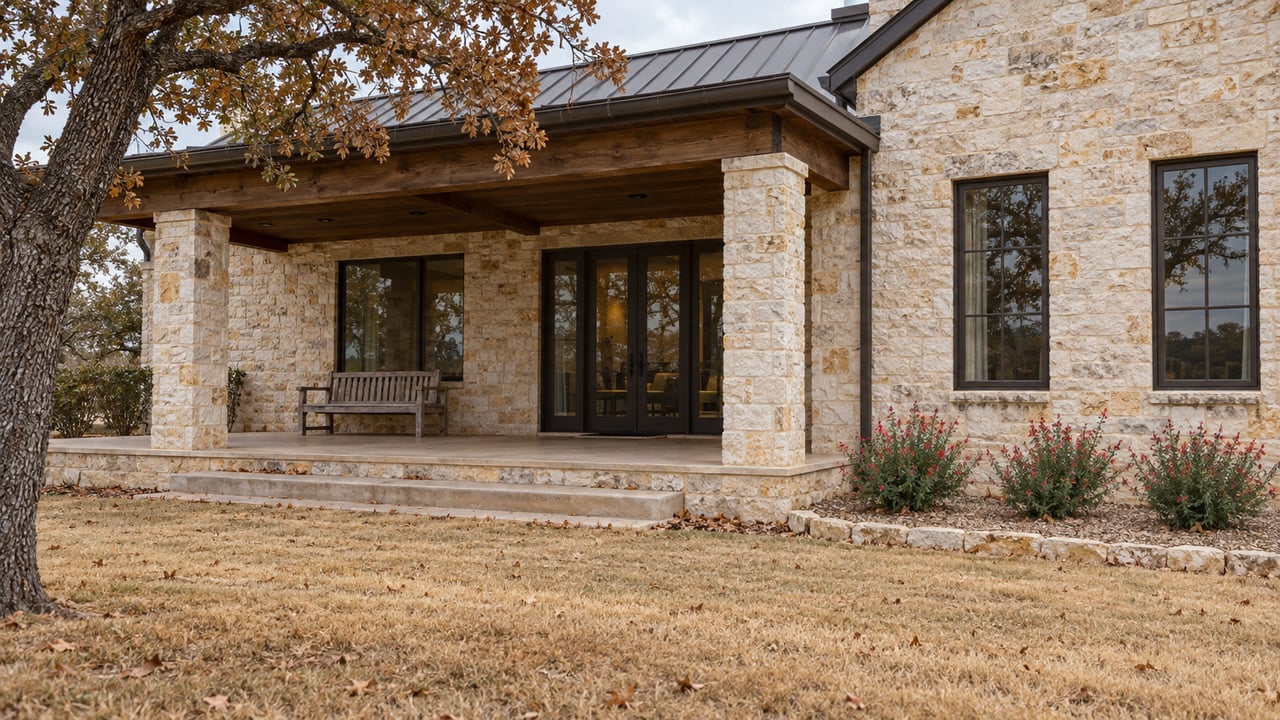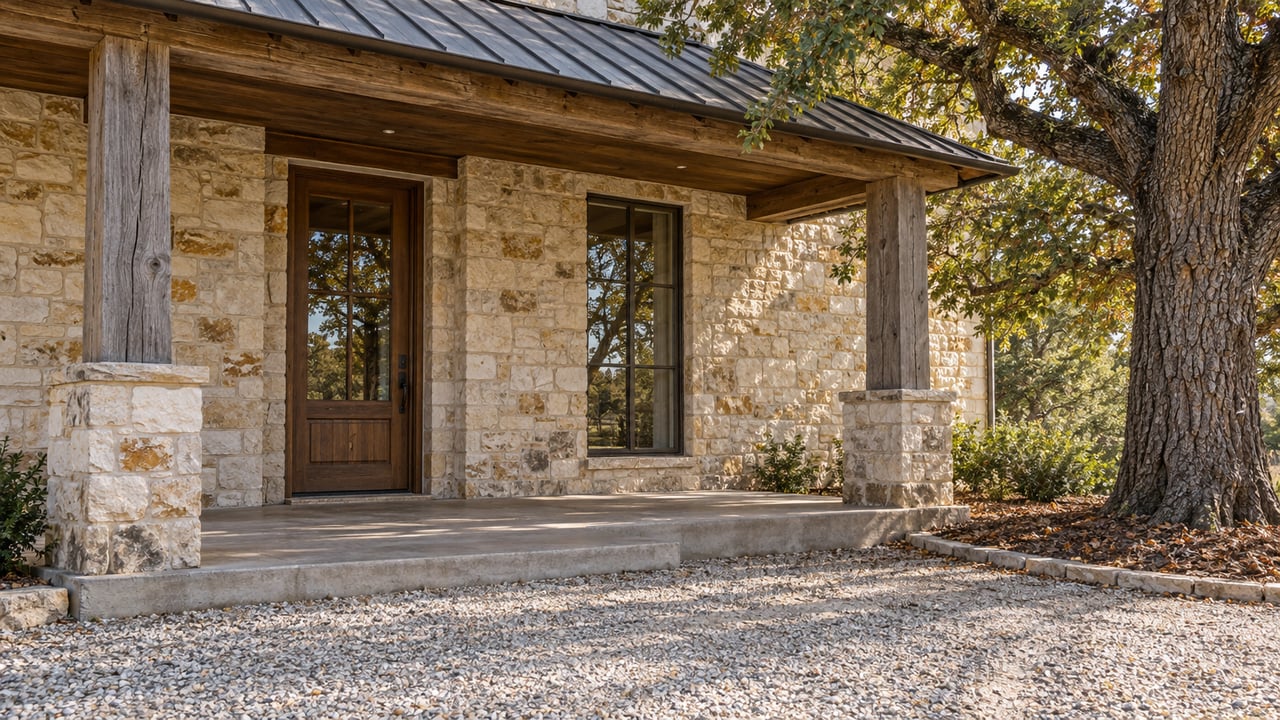
Say you're a buyer reading a seller's disclosure on a place outside Lingleville this month. The form has a line for unplatted easements, a line for conservation easements, and a line for lawsuits that directly or indirectly affect the property. No line asks whether a 765-kV transmission route approved on August 28, 2026 runs across the back pasture.
That's the friction in Erath County land deals right now. The Public Utility Commission of Texas has approved Oncor's Dinosaur–Longshore line, so the route is decided on paper. The easements that will eventually sit in the county records don't exist yet. Until surveys, offer letters, and signed or condemned easements catch up, the line is in the public record at the PUC and at Oncor, and the standard forms in a sale have no line written for it.
Where route 559 stands now
On August 28, 2026, the PUC approved route 559 in Docket No. 59315, a 242.56-mile line from a new Dinosaur Switch about 3 miles north of Glen Rose to Oncor's existing Longshore Switch about 4.5 miles west of Forsan in Howard County. The final order puts the total estimated cost at about $2.24 billion. It generally designs the line within a 200-foot right-of-way. The Dallas Morning News describes towers for lines this size as steel lattice structures about the height of a 15-story building.
The case caption covers 22 counties, Erath, Comanche, Eastland, Hood, and Bosque among them. The Dublin Citizen reported that the commission voted unanimously, and quoted Erath County Judge Brandon Huckabee: "We are regrouping and looking at what we can do next to support the citizens of Erath County."
The approval isn't the last filing. Several parties filed motions for rehearing in September, including Middle Trinity Groundwater Conservation District and American Stewards of Liberty. On October 15, the PUC extended its time to act on those motions "to the maximum extent allowed by law."
The schedule in the order is an estimate. It shows right-of-way acquisition by June 2027, final engineering and design by January 2028, and construction finished and the line energized by June 2029, and it assumes the PUC would approve within 180 days of filing. Oncor's project page still lists completion in 2029. If that estimate holds, acreage along the route could sit on an approved line without a finished easement until around mid-2027, and longer if acquisition runs behind.
The paperwork a sale relies on asks other questions
The standard documents in a Texas land sale weren't written with a route like this in mind. Here's how each one lines up against route 559 today.
| Where buyers usually look | What it covers | Whether it catches route 559 today |
|---|---|---|
| TREC Seller's Disclosure Notice, Form 55-1 | Unplatted easements, conservation easements, lawsuits affecting the property | It has no item labeled condemnation or transmission route |
| Texas Property Code §5.008 | Residential property with no more than one dwelling unit | Written for property with a dwelling |
| Recorded easements | Instruments already signed and filed | Route 559 easements are still ahead in Oncor's process |
| PUC Docket 59315 and Oncor's maps | The approved links and the 200-foot right-of-way | Yes, for anyone who looks |
TREC says Form 55-1, effective May 28, 2026, is required for previously occupied single-family residences. The statute behind it applies to "residential real property comprising not more than one dwelling unit." By its own wording, the statute is written for property with a dwelling on it. Even on a homestead tract, the form has no box written for a utility line that has been approved but has no easement yet. What a particular seller owes a buyer beyond the form is a question for a Texas real estate attorney.
On Erath County acreage this fall, the practical answer is to put the route on the table directly instead of counting on the forms to raise it. For a seller, that means having the answer ready before a buyer asks. For a buyer, it means making the check part of the first week, not the last.
Checking a tract against route 559
The public tools are already out there, and they're specific enough to work at the parcel level.
- Open Oncor's interactive route map, which shows the route links next to nearby parcels.
- Match the approved link sequence for route 559 against that map: A1-A2-C3-C41-C8-D23-D71-D72-F31-F32-G22-G3-H3-J2-J3-L3-M4-P1-Q1-Z. The filed maps also show alternative links the PUC didn't pick, so a link near the property only matters if it's one of these.
- Ask the seller whether Oncor has sent any letters. Landowners on the approved route were invited to outreach meetings by letter, and Oncor followed up by phone in some cases.
- Look at the PUC docket for anything filed since the October 15 extension.
- Call Oncor's project line for this project at 214.486.5841.
Those letters went to landowners on the approved route ahead of Oncor's outreach meetings. The Stephenville meeting was held October 26 at City Hall at City Limits. The tour's tenth and final meeting was scheduled for November 4 in De Leon. A seller who got one of those letters is already on Oncor's list.
What the order lets a landowner change, and how much
The Dallas Morning News account of the Stephenville meeting shows why the line on Oncor's map isn't the last word on any one tract. Right-of-way agents with Universal Field Services sat down with landowners at digital maps. In one session the paper described, a Lingleville landowner pointed out features the aerial view missed: a newly built house, a cemetery, an underground gas pipeline, water tanks, a change in hilly terrain, and an existing 345-kV corridor. An Oncor engineer told the group, "From an aerial perspective, we have a limited view of what's going on." The paper also reported that moving the line up or down could bring in more landowners or create angles that put more towers on a property.
The order sets the limits on how far the line can move. Ordering Paragraph 15 has Oncor cooperate with directly affected landowners on minor deviations, but only where the landowner got notice and agrees. Paragraph 16 requires consent from every landowner affected by a larger deviation, plus a reasonably direct path without unreasonable cost or delay. Paragraph 14 requires erosion controls and restoring the land to its original contours and grades unless the owner agrees otherwise, with exceptions for safety or operational needs.
For a buyer, this means a tract crossed on Oncor's map in November could look a little different by the time the easement is drawn, and how much it moves depends on the neighbors as much as the owner. Landowners could submit route modification requests at the meetings. Oncor says it will weigh them against regulatory, engineering, reliability, and safety requirements.
Erath County raised its own concern before the vote. In a resolution the Dublin Citizen reported in December 2025, the Commissioners Court said tall transmission towers could interfere with the county's public-safety microwave network, which was scheduled to be finished in June 2026. The final order finds five radio, microwave, or other electronic installations within 2,000 feet of route 559 and says adverse effects on communications are unlikely. It doesn't set a mitigation requirement specific to the county.
The offer sequence Texas law lays out
Oncor's handout from the meetings said the next steps are land surveys and a route feasibility review. It also said, "Our goal is to reach a voluntary agreement with you on the property rights needed for the project and the compensation you receive," and that "discussions can continue throughout the process, including after the Initial Offer Letter and Final Offer Letter are provided."
Chapter 21 of the Texas Property Code sets the order those letters come in:
- Initial offer. It has to be in writing and include the Landowner's Bill of Rights, a conveyance instrument, contact details for the company's representative, and a larger, bold statement saying whether the compensation includes damages to the remaining property or an appraisal.
- Appraisal disclosure. When it makes an offer, the company has to send any appraisal reports on the property it produced or acquired in the past 10 years, by certified mail with return receipt requested.
- Bill of Rights timing. The owner has to receive it at least seven days before the final offer.
- Final offer. It comes at least 30 days after the initial offer, follows an appraisal by a certified appraiser, has to equal or exceed that appraisal, and gives the owner at least 14 days to respond.
The Texas Attorney General's Landowner's Bill of Rights, dated November 2025, also lists the right to hire an appraiser and an attorney, a special commissioners' hearing before condemnation, and a trial before a judge or jury after that. For electric-line easements, the statute also requires the instrument to spell out surface uses, location and maximum width, access, damages and restoration, fences and gates, and a ban on other uses without the owner's express written consent.
That list matters for how a ranch keeps working. Oncor says owners keep ownership of easement land and can use it in ways that don't interfere with the facilities. It also says grazing, crop production, and other agricultural use typically continue after construction. Its stated approach to payment is market-based compensation tied to the rights acquired and long-term property use. A 2010 Texas A&M Real Estate Center guide, "Shock Treatment: Negotiating Transmission Line Easements," makes the practical point that the rights granted matter as much as the check. It separates the initial easement payment from damages during construction, damages from later use, and damage to land off the easement. The guide predates later changes to Chapter 21, so read it for the negotiating topics, not for the current offer procedure.
A few common questions
Does the approval mean construction starts soon? The order's estimate puts right-of-way acquisition through June 2027 and energization by June 2029. Surveys and the feasibility review come first.
How wide a strip are we talking about? The order generally designs the line within 200 feet of right-of-way. Oncor's June 2026 fact sheet compares that with 480 feet for three double-circuit 345-kV lines.
Is the approval final? Rehearing motions were filed in September, and on October 15 the PUC extended its time to act on them. Docket 59315 is where any ruling will show up.
This post is general information, not legal, tax, or financial advice. If a tract is on route 559, talk through your own situation with a Texas real estate attorney, and with an appraiser if you need one.
If you're selling Erath County land near Lingleville, Dublin, or anywhere else along route 559, or making an offer on a place there, we'll pull up the route map with you and check the tract before anyone signs. Reach Ridge and Dutch Taylor at Ridge Tex Realty.